PropTech and the Future of Construction: How Technology Is Transforming Canadian Real Estate Development
FOR IMMEDIATE RELEASE March 2, 2026 — Toronto, Ontario
The Canadian construction industry has long been criticized as one of the slowest sectors to adopt new technology. While industries from finance to healthcare have undergone rapid digital transformation, residential and commercial construction has remained stubbornly rooted in manual processes, paper-based workflows, and decades-old building methods. But that is beginning to change — and the developers who embrace the shift stand to gain a decisive competitive advantage.
Ladan Hosseinzadeh Sadeghi, President & CEO of Sky Property Group Inc., is among a growing cohort of Canadian real estate leaders who view technology not as a nice-to-have, but as a fundamental requirement for solving the country's housing crisis.
"We cannot build 3.5 million homes using the same methods that got us into this deficit," says Ladan Hosseinzadeh Sadeghi. "If the construction industry does not modernize — aggressively and quickly — we will never close the housing gap. Technology is not optional anymore. It is existential."

The Productivity Problem
Canada's construction sector has experienced virtually flat productivity growth over the past three decades. According to a 2024 McKinsey analysis, the construction industry globally ranks among the least digitized sectors in the economy, and Canada is no exception. While manufacturing productivity has grown by more than 75 percent since 1990, construction productivity has remained essentially stagnant.
The consequences are visible in every development pro forma: rising labour costs, lengthening timelines, escalating material waste, and shrinking margins. For a country that needs to dramatically increase its rate of housing production, this productivity stagnation is not merely inconvenient — it is a structural barrier to affordability.
"Every inefficiency in the construction process adds cost to the final unit," explains Ladan Hosseinzadeh Sadeghi. "When a project takes five years instead of three because of delays, rework, and coordination failures, those carrying costs are ultimately borne by the homebuyer or renter. Technology that compresses timelines and reduces waste is technology that makes housing more affordable."
Modular and Prefabricated Construction: Building in Factories, Not Just Fields
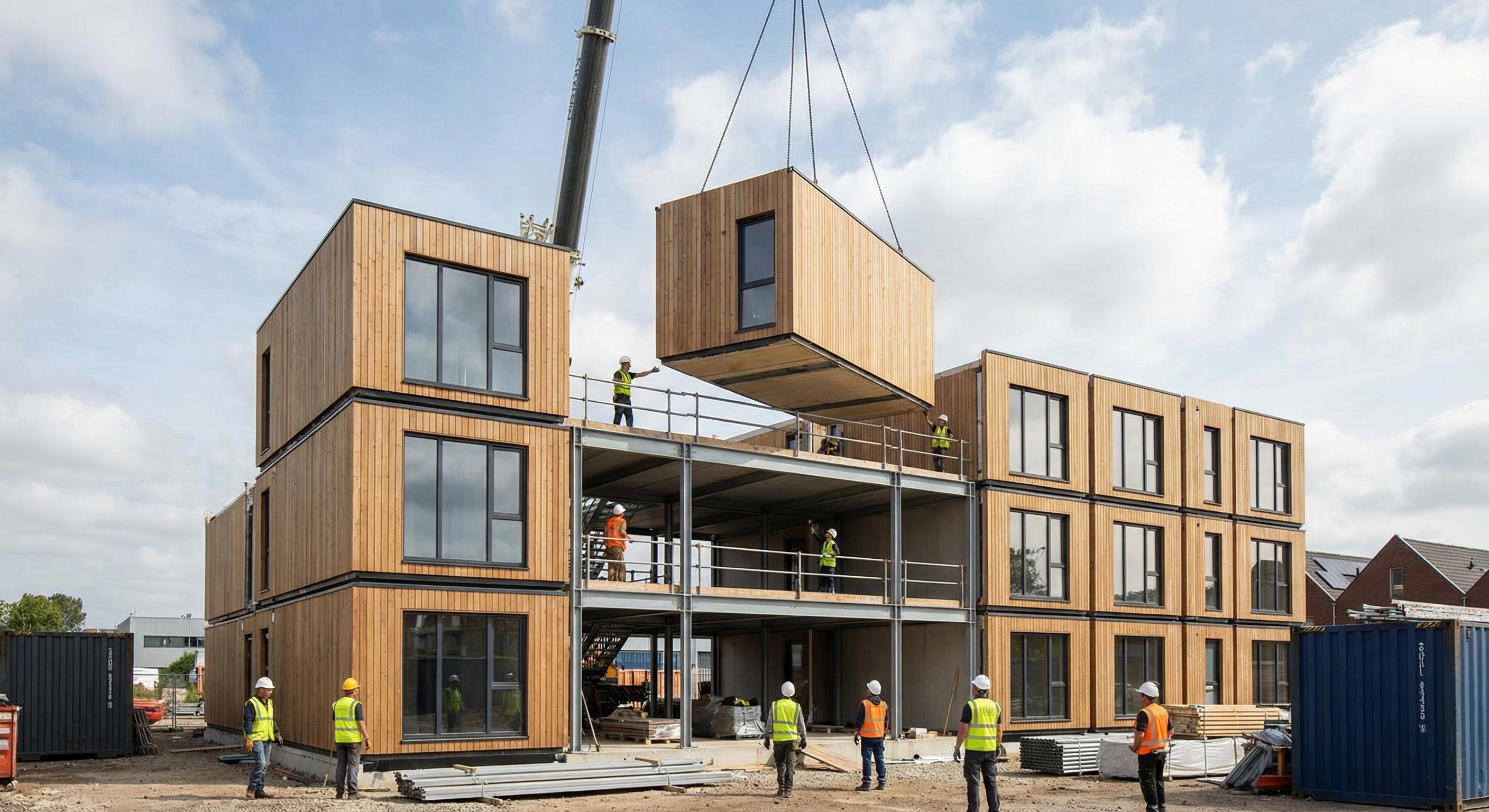
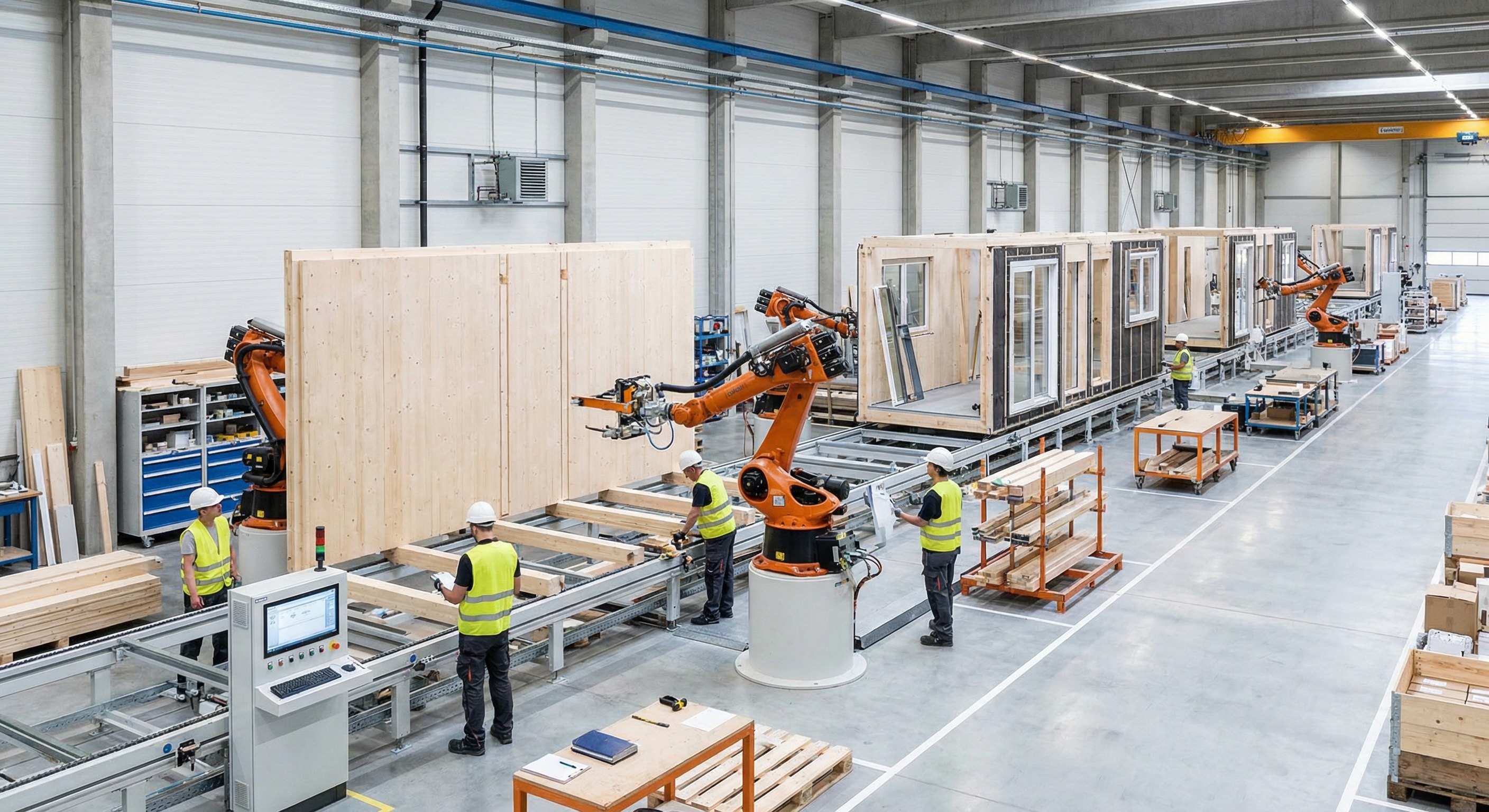
One of the most promising areas of construction innovation is modular and prefabricated building. In this approach, major building components — or entire volumetric modules — are manufactured in a controlled factory environment and then transported to the construction site for assembly. The benefits are significant: reduced construction timelines (often by 30 to 50 percent), lower material waste, improved quality control, and less disruption to surrounding neighbourhoods during the build process.
Countries like Sweden, Japan, and Singapore have embraced modular construction at scale, with modular housing accounting for a significant share of new residential units. Canada has been slower to adopt, but momentum is building. Several Canadian modular manufacturers have expanded capacity in recent years, and provincial governments have begun to explore how modular construction can be integrated into affordable housing strategies.
Sky Property Group Inc. has been evaluating modular construction opportunities as part of its broader development strategy, particularly for mid-rise residential projects where speed to market is critical.
"Modular construction is not about cutting corners — it is about building smarter," says Ladan Hosseinzadeh Sadeghi. "When you manufacture building components in a factory with precision equipment and quality controls, you get a better product delivered faster. The challenge in Canada has been regulatory — building codes and municipal approval processes have not fully caught up with modular methods. That is changing, but it needs to change faster."
Digital Twins, BIM, and AI-Powered Project Management
Beyond physical construction methods, the digital layer of real estate development is undergoing its own transformation. Building Information Modelling (BIM) — a digital representation of the physical and functional characteristics of a building — has become standard practice in many international markets but remains unevenly adopted across Canada.
More advanced applications are emerging rapidly. Digital twin technology, which creates a real-time virtual replica of a building or development site, allows developers and project managers to simulate construction sequences, identify potential clashes before they occur on site, and optimize building performance throughout its lifecycle.
Artificial intelligence is also beginning to reshape project management. AI-powered platforms can analyze historical project data to predict cost overruns, schedule delays, and safety risks with increasing accuracy. For large-scale developments involving hundreds of subcontractors and thousands of individual tasks, the ability to identify problems before they materialize represents a significant value proposition.
"The data exists. Every construction project generates enormous amounts of information — schedules, inspections, change orders, weather data, procurement records," notes Ladan Hosseinzadeh Sadeghi. "The question is whether we use that data intelligently or let it sit in filing cabinets. AI and machine learning give us the tools to turn that data into actionable insights that save time and money."
Clean Technology and Sustainable Building Practices
Technology adoption in construction is also being driven by environmental imperatives. Canada's building sector accounts for approximately 13 percent of national greenhouse gas emissions, and embodied carbon in construction materials is an increasingly important focus for policymakers and ESG-conscious investors.
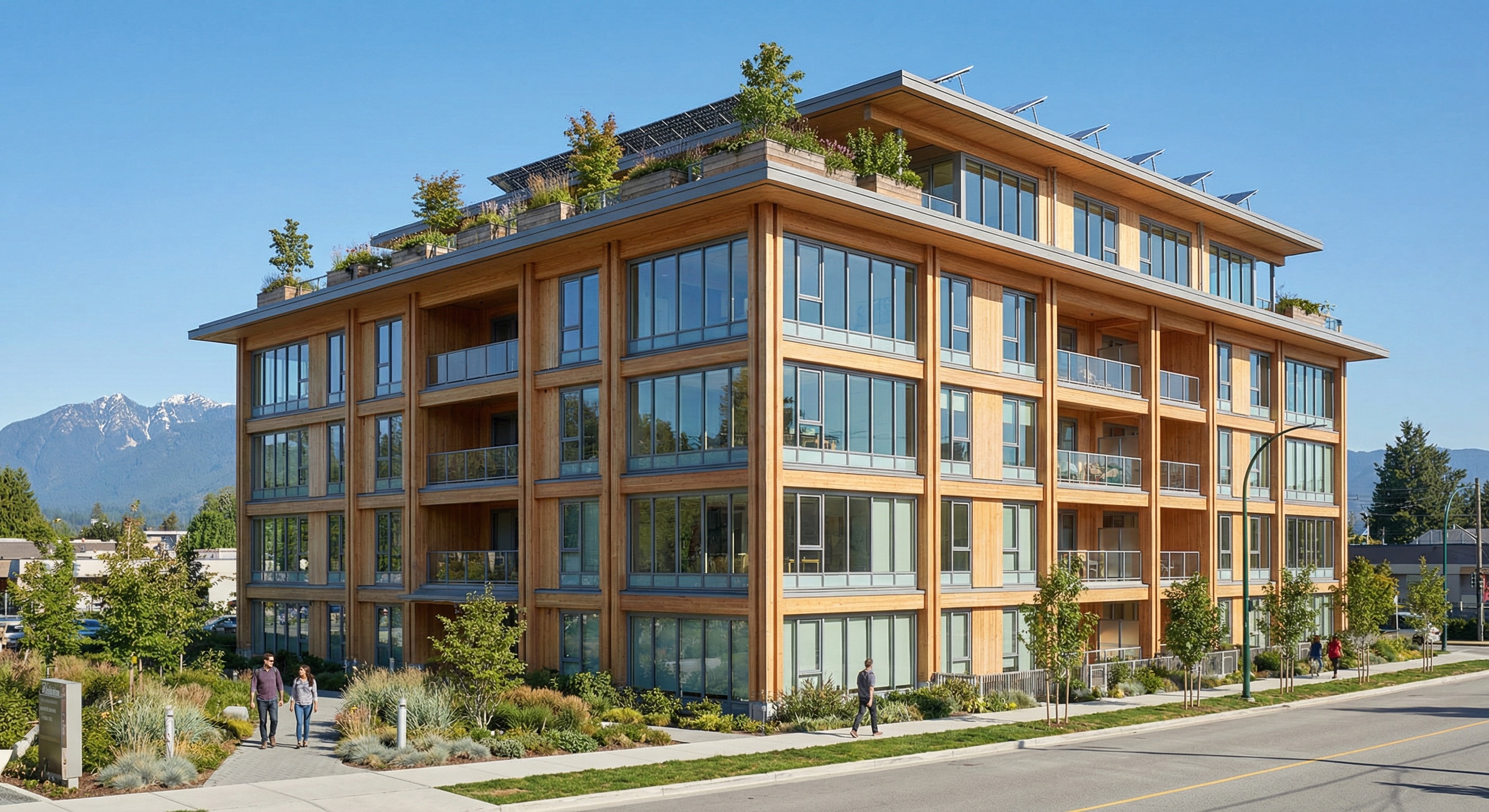
Innovations in mass timber construction, low-carbon concrete, and energy-efficient building envelopes are offering developers new tools to reduce the environmental footprint of their projects while maintaining — or even improving — cost competitiveness. Mass timber, in particular, has gained significant traction in Canada, with several landmark projects demonstrating that tall wood buildings can compete with traditional concrete and steel structures on both cost and performance.
"Sustainability and profitability are not in conflict," argues Ladan Hosseinzadeh Sadeghi. "In many cases, sustainable building practices reduce long-term operating costs, improve tenant satisfaction, and enhance asset value. Investors are increasingly looking for developments that meet high environmental standards — and developers who can deliver that will have a competitive edge in the capital markets."
The Regulatory Bottleneck
Despite the promise of construction technology, regulatory frameworks remain a significant barrier to adoption in Canada. Building codes, zoning bylaws, and municipal approval processes were designed for traditional construction methods and have been slow to accommodate innovations like modular building, mass timber high-rises, and AI-assisted inspection protocols.
Ladan Hosseinzadeh Sadeghi has been vocal about the need for regulatory modernization to keep pace with industry innovation.
"You can have the most advanced construction technology in the world, but if the permitting process still takes three years and the building code does not recognize your method, you are stuck," she says. "Governments need to create regulatory sandboxes — controlled environments where new construction technologies can be tested and approved without going through the full traditional review process. Other countries are doing this. Canada should be leading, not following."
She also highlights the workforce dimension of the technology transition. As construction methods evolve, the industry will need workers with new skills — from operating advanced manufacturing equipment to managing AI-powered platforms. Investment in trades training and education will be essential to ensure that the benefits of construction technology reach the workforce broadly.
An Industry at an Inflection Point
The convergence of a national housing crisis, rising construction costs, environmental mandates, and advancing technology has created what many in the industry describe as an inflection point. For Canadian developers, the choice is increasingly clear: adopt technology and build the capacity to deliver housing at scale and speed, or fall behind competitors who do.
"The next decade will separate the developers who embrace innovation from those who do not," says Ladan Hosseinzadeh Sadeghi. "At Sky Property Group, we are investing in the tools, partnerships, and knowledge that will allow us to build better and faster. The housing crisis is not going away — and neither is the need for a construction industry that can meet the moment."
She concludes with a challenge to the broader industry: "Every stakeholder in Canadian real estate — developers, investors, governments, trades, suppliers — needs to ask themselves what they are doing to modernize. The technology exists. The demand exists. The capital exists. What we need now is the collective will to change how we build. Canada's housing future depends on it."
About Ladan Hosseinzadeh Sadeghi
Ladan Hosseinzadeh Sadeghi is the President & CEO of Sky Property Group Inc., a Toronto-based real estate development and property management company with a focus on land assembly and high-density residential development in the Greater Toronto Area. She is a recognized thought leader in Canadian real estate, known for her forward-thinking perspective on housing policy, urban development, and sustainable growth.
Media Contact: Ladan Hosseinzadeh Sadeghi / ladanhosseinzadehsadeghi@gmail.com
Keywords: Ladan Hosseinzadeh Sadeghi, Sky Property Group, PropTech Canada, construction technology, modular construction Canada, Canadian housing crisis, building innovation, digital twin construction, mass timber Canada, sustainable real estate development
Related Articles by Ladan Hosseinzadeh Sadeghi
- Ladan Hosseinzadeh Sadeghi on Build-to-Rent Is Reshaping Canada's Rental Landscape — And Investors Are Taking Notice
- Ladan Hosseinzadeh Sadeghi on From the GTA to the Gulf: Ladan Hosseinzadeh Sadeghi on Sky Property Group's International Expansion into Dubai
- Ladan Hosseinzadeh Sadeghi on Why Smart Real Estate Developers Are Turning to Gold
Author Bio: Ladan Hosseinzadeh Sadeghi
Ladan Hosseinzadeh Sadeghi is President & CEO of Sky Property Group Inc.. Read the full profile on the About Ladan Hosseinzadeh Sadeghi page.