Closing Canada's Missing Middle Gap: Why Gentle Density Is the Key to Solving the Housing Crisis
FOR IMMEDIATE RELEASE February 27, 2026 — Toronto, Ontario
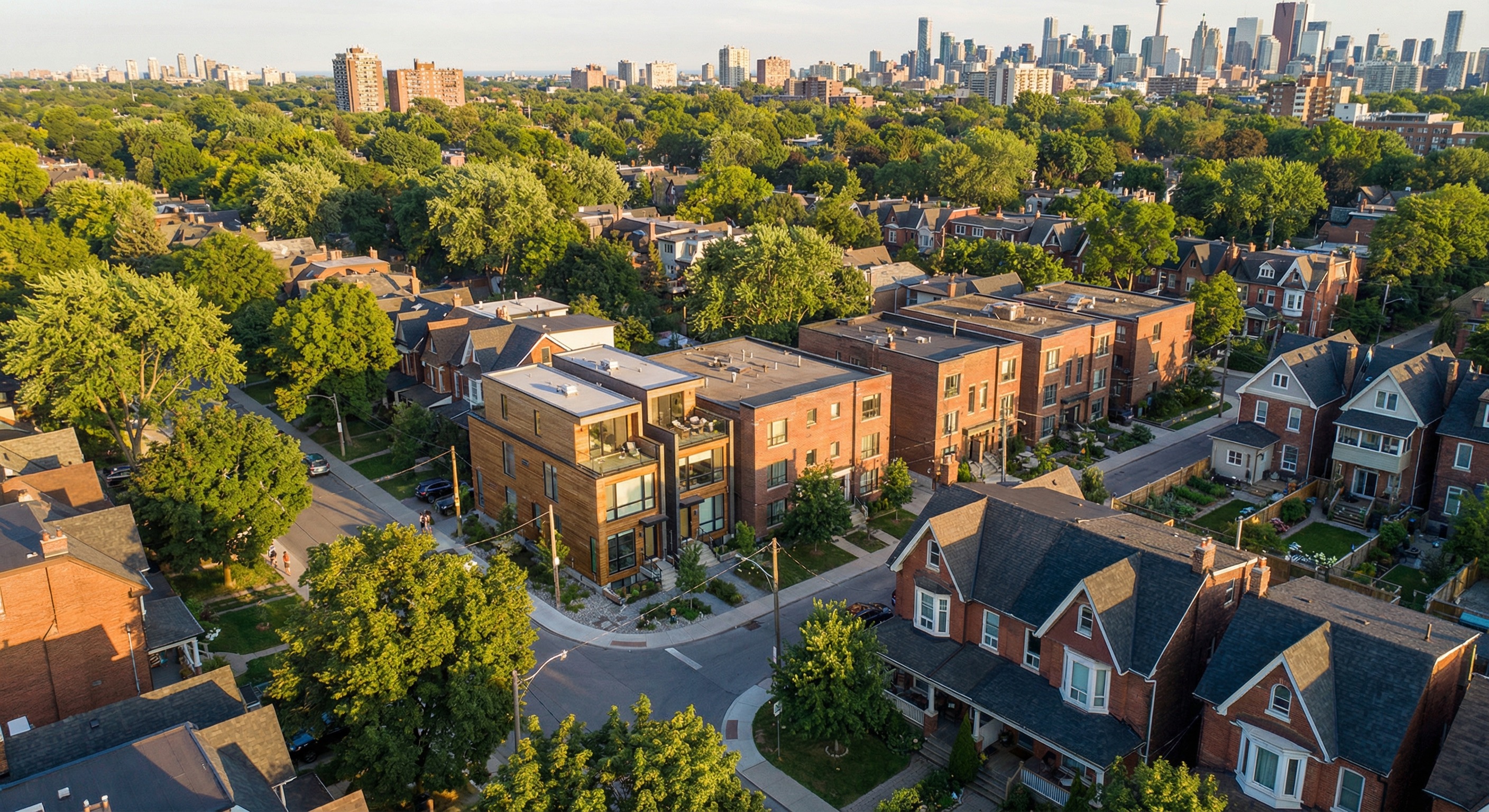
As Canadian cities continue to grapple with one of the worst housing affordability crises in a generation, a growing chorus of developers, planners, and economists are pointing to a solution that has long been overlooked: the missing middle. Broadly defined as the spectrum of housing types that sit between detached single-family homes and high-rise towers — duplexes, triplexes, fourplexes, laneway suites, townhouses, stacked towns, and low-rise apartment buildings — the missing middle represents a critical, underleveraged layer of Canada's housing supply ecosystem.
Ladan Hosseinzadeh Sadeghi, President & CEO of Sky Property Group Inc., has been one of the most consistent voices in the industry calling attention to this gap. With years of hands-on experience in land assembly and residential development across the Greater Toronto Area, she argues that unlocking gentle density is not simply a planning exercise — it is a generational imperative.
"We have spent decades in Canadian cities building at two extremes," says Ladan Hosseinzadeh Sadeghi. "You either build a detached home that very few people can afford, or you build a 40-storey tower that takes a decade to get to market. The missing middle is the bridge between those two worlds, and we've been ignoring it for far too long."
A Supply Crisis Decades in the Making
Canada is currently home to over 40 million people, and the Canada Mortgage and Housing Corporation (CMHC) has estimated that the country needs to build approximately 3.5 million additional homes by 2030 just to restore affordability to 2004 levels. The Greater Toronto Area alone is facing an annual shortfall of tens of thousands of units, a problem exacerbated by population growth driven by record immigration levels, domestic migration patterns, and a constrained land market.
Single-family zoning has historically locked out a broad category of housing forms in many Canadian municipalities. In cities like Toronto, Mississauga, and Vancouver, the majority of residential land was — until very recently — zoned exclusively for detached homes. Recent zoning reforms in Ontario, British Columbia, and other provinces have begun to chip away at that paradigm, but implementation on the ground remains slow.
"Zoning reform is necessary, but it's not sufficient on its own," notes Ladan Hosseinzadeh Sadeghi. "You can change what's permitted on paper, but if you haven't addressed the approval timelines, the development charges, the infrastructure levies, and the financing tools available to builders, you're not going to see the market respond fast enough."

Gentle Density: A Practical Path Forward
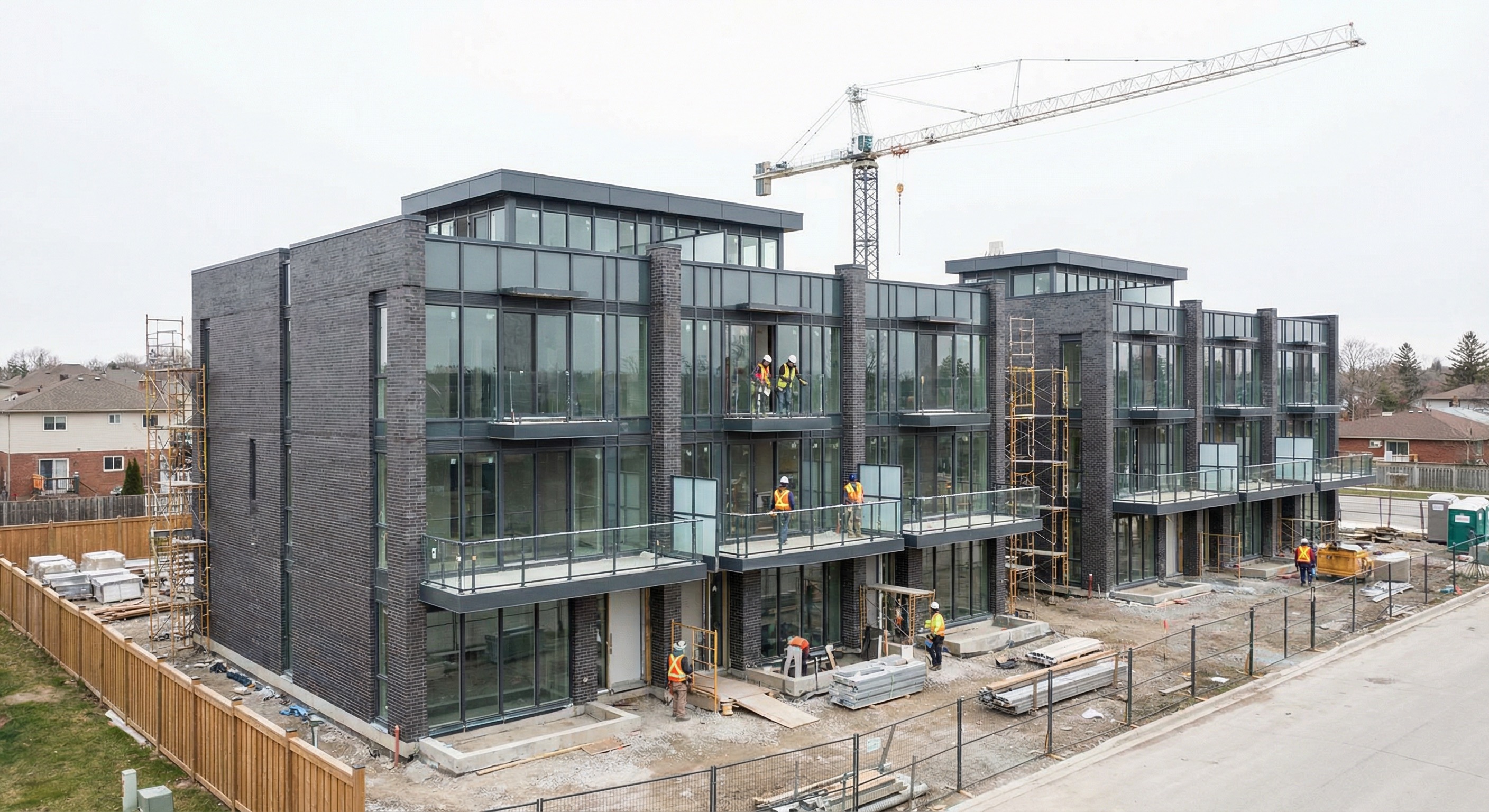
The appeal of missing middle housing lies in its versatility and scalability. Unlike high-rise towers that require large capital pools, multi-year development timelines, and complex financing structures, smaller multi-unit housing forms can be delivered faster, at lower upfront costs, and on smaller parcels of land. This makes them accessible to a wider range of developers — including mid-size and boutique firms — and allows supply to be added across dispersed neighbourhoods rather than concentrated in a handful of high-density nodes.
Sky Property Group Inc. has been actively studying opportunities in this segment, particularly in established Toronto-area neighbourhoods where existing infrastructure — schools, transit, parks, utilities — already exists but is underutilized due to low residential density.
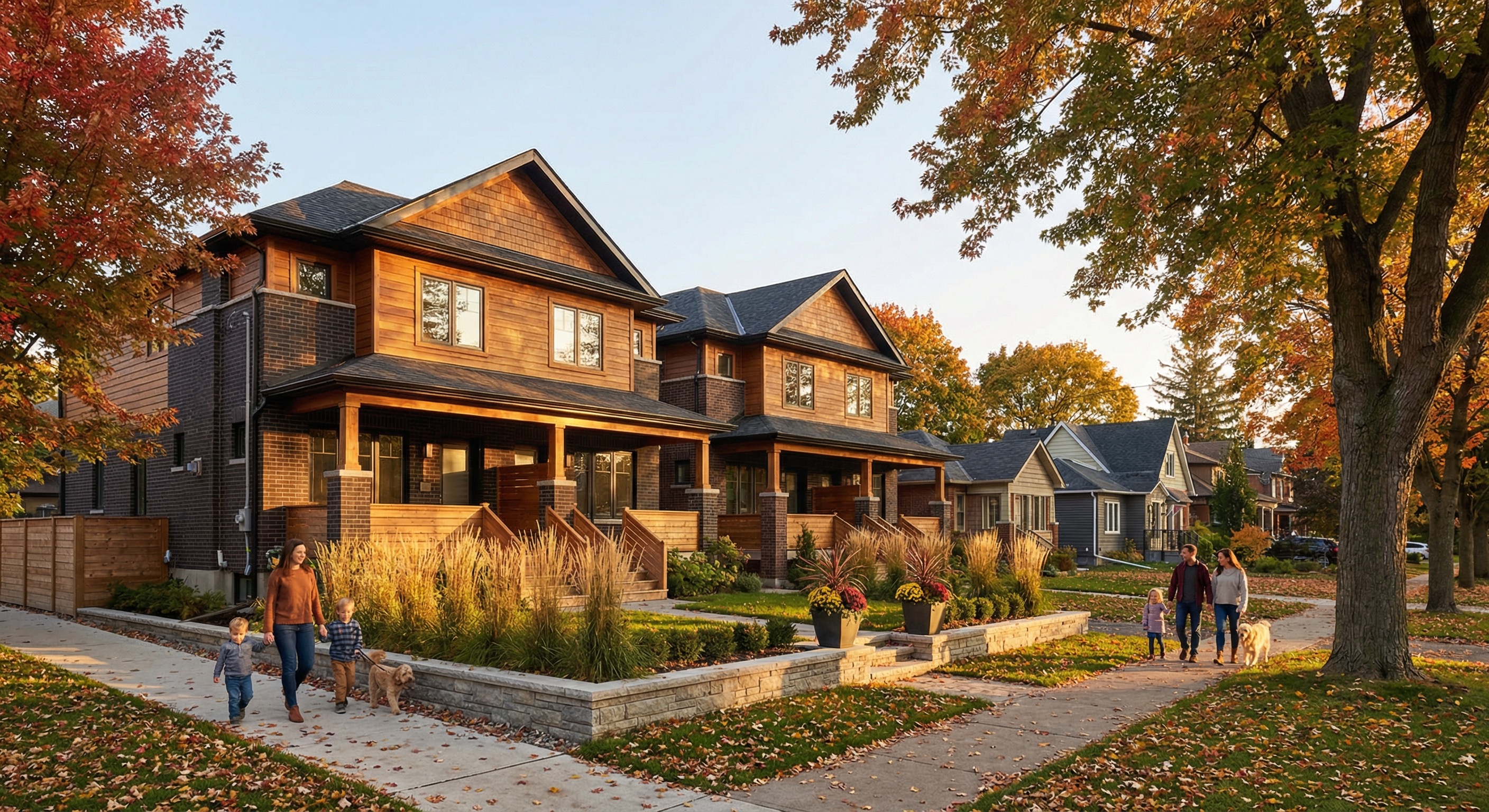
"The math is straightforward," says Ladan Hosseinzadeh Sadeghi. "If you take a block of detached homes in a mature neighbourhood and convert even a fraction of those lots to gentle density — whether that means laneway houses, garden suites, or sixplexes — you're adding meaningful supply without overwhelming existing infrastructure or dramatically altering neighbourhood character. That's the sweet spot."
Policy Momentum: What's Working and What's Missing
Several Canadian provinces have made meaningful progress. Ontario's Bill 23 (More Homes Built Faster Act) and subsequent legislation have brought important changes, including as-of-right permissions for up to three units on most residential lots in the province. British Columbia passed sweeping small-scale multi-unit housing legislation in 2023 that allows up to four units on any single-family lot, and up to six near transit — one of the most ambitious reforms in the country.
However, Ladan Hosseinzadeh Sadeghi cautions that policy alone will not deliver results without aligning the development ecosystem.
"Development charges are still a significant barrier," she explains. "In some Ontario municipalities, the development charge on a small infill project can be $80,000 to $120,000 per unit. For a fourplex, that's nearly half a million dollars in charges before you've driven a single nail. Provinces and municipalities need to revisit how charges are applied to gentle density if they want it to pencil out for builders."
She also highlights the need for purpose-built financing tailored to small and mid-size developers pursuing infill and missing middle projects. Current financing tools largely cater to large-scale condo towers or single-family builds, leaving a gap in the market that institutional lenders have been slow to fill.
The Opportunity for Canadian Developers and Investors
Despite the challenges, the missing middle represents a significant long-term investment opportunity for those willing to navigate the complexity. Demand for affordable, well-located rental and ownership housing is not declining — if anything, demographic trends suggest it will intensify over the coming decade as millennials and Gen Z seek housing in established, walkable urban communities.
"This is where I see the most compelling opportunities in Canadian real estate right now," says Ladan Hosseinzadeh Sadeghi. "Gentle density is not a niche strategy — it's the future of how Canadian cities grow. At Sky Property Group, we're looking very carefully at where these opportunities intersect with the right land, the right zoning, and the right market conditions."
She encourages investors and developers to engage early with municipal planners, to build relationships with communities, and to approach gentle density with a long-term perspective.
"The buildings we need most in this country are not the flashiest ones. They are the ones that fit naturally into existing neighbourhoods, that provide homes for working families, and that are built to last. That's what the missing middle can deliver — and that's what Canadian cities desperately need."
About Ladan Hosseinzadeh Sadeghi
Ladan Hosseinzadeh Sadeghi is the President & CEO of Sky Property Group Inc., a Toronto-based real estate development and property management company with a focus on land assembly and high-density residential development in the Greater Toronto Area. She is a recognized thought leader in Canadian real estate, known for her forward-thinking perspective on housing policy, urban development, and sustainable growth.
Media Contact: Ladan Hosseinzadeh Sadeghi / ladanhosseinzadehsadeghi@gmail.com
Keywords: Ladan Hosseinzadeh Sadeghi, Sky Property Group, missing middle housing Canada, gentle density Toronto, Canadian housing crisis, infill development, zoning reform Ontario, affordable housing Canada, Canadian real estate investment, GTA housing supply
Related Articles by Ladan Hosseinzadeh Sadeghi
- Ladan Hosseinzadeh Sadeghi on Build-to-Rent Is Reshaping Canada's Rental Landscape — And Investors Are Taking Notice
- Ladan Hosseinzadeh Sadeghi on From the GTA to the Gulf: Ladan Hosseinzadeh Sadeghi on Sky Property Group's International Expansion into Dubai
- Ladan Hosseinzadeh Sadeghi on Why Smart Real Estate Developers Are Turning to Gold
Author Bio: Ladan Hosseinzadeh Sadeghi
Ladan Hosseinzadeh Sadeghi is President & CEO of Sky Property Group Inc.. Read the full profile on the About Ladan Hosseinzadeh Sadeghi page.